


What’s Being Returned
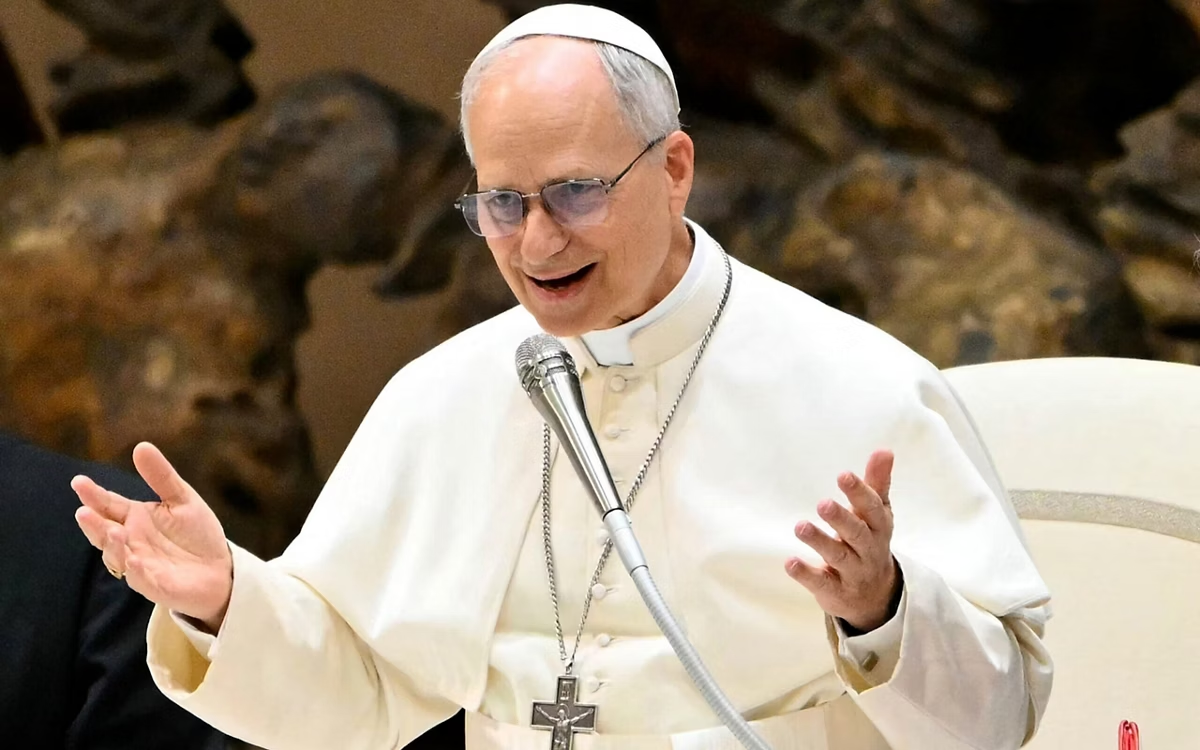
Pope Leo XIV gave the artifacts to the Canadian Conference of Catholic Bishops. Among them are a rare Inuvialuit Inuit kayak, masks, moccasins, birch-bark etchings, and a sled sculpture made of ivory and seal skin.
The Vatican Museums kept these pieces in the Anima Mundi ethnographic collection for decades.
A Gesture of Respect and Reconciliation
In a joint statement, the Vatican and Canadian bishops called the return a “concrete sign of dialogue, respect, and fraternity.”
Pope Leo XIV described the act as “ecclesial sharing” and emphasized the deep connections between these artifacts and Indigenous cultures.
The Road to Repatriation
Catholic missionaries sent these artifacts to Rome between 1923 and 1925 for a missionary exhibition during Pope Pius XI’s Holy Year. Later, many joined the Vatican’s permanent museum collection.
Negotiations sped up after Pope Francis apologized in 2022 for the Church’s role in Canada’s residential school system.
Canadian bishops plan to transfer the artifacts soon to National Indigenous Organizations. These groups will then return them to their original communities.
The first stop will be the Canadian Museum of History in Gatineau. Experts and Indigenous representatives will examine the pieces, trace their provenance, and decide their final homes.
Broader Significance
For many Indigenous leaders, the return goes beyond symbolism. These artifacts are living cultural treasures rather than mere historical objects.
Their return marks a concrete step in healing and reconciliation, especially considering the Church’s historical role in assimilation.