


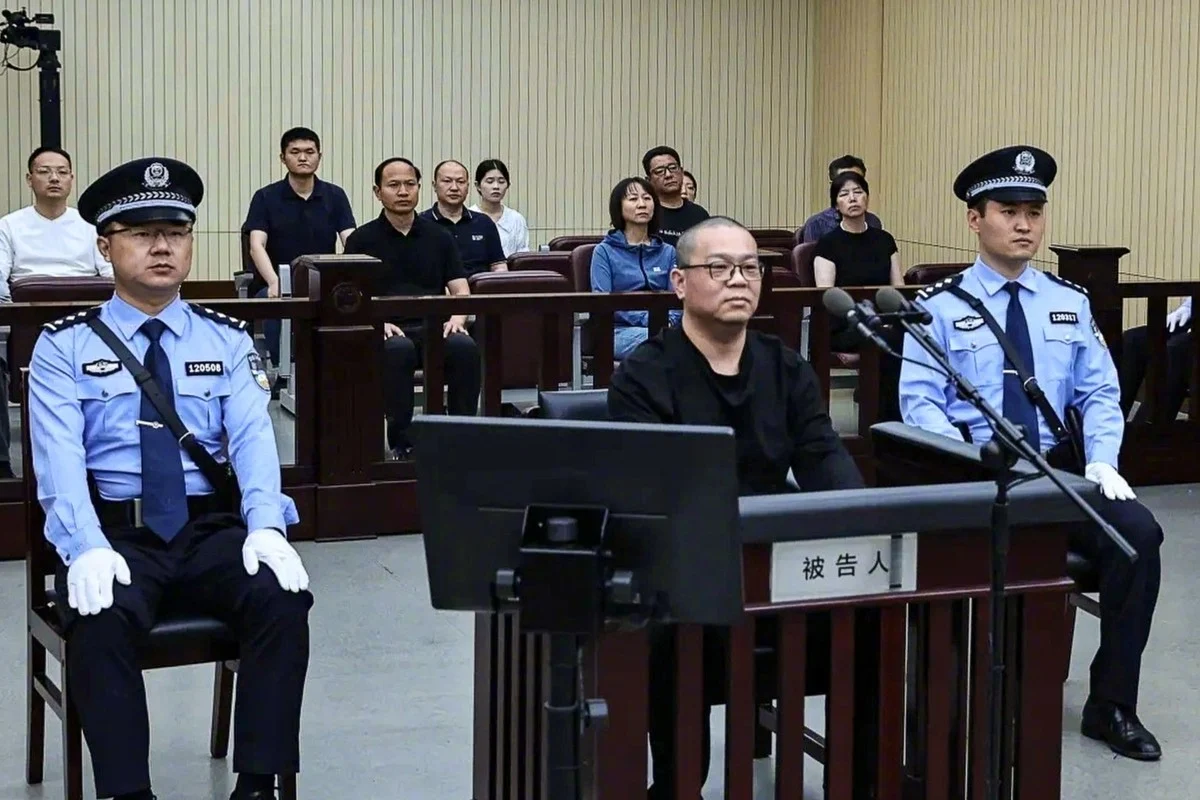
The Government of China media said that Bai Tianhui, a former senior banker, faced execution after his conviction for taking over US $155 million in bribes. Moreover, outlets stressed the scale of the case.
Prosecutors said that between 2014 and 2018, Bai abused his position. He granted special treatment to clients and, in return, collected illicit payments totaling 1.1 billion yuan.
Rare death sentences for financial crimes
Executions for corruption remain uncommon in China. Even so, courts apply the death penalty in cases with huge bribes or major social harm.
Bai now becomes the second high-ranking Huarong executive to receive this penalty. His predecessor, Lai Xiaomin, died in 2021 after he accepted around US $278 million in bribes.
Chinese courts usually avoid executions without a reprieve. A reprieve often converts the sentence to life in prison.
However, in Bai’s case, the court denied any reprieve. This decision, therefore, highlighted the gravity seen by prosecutors and judges.
Impact and message from the anti-corruption campaign
The execution sends a strong signal from the Chinese government about corruption. Furthermore, it targets misconduct in the financial sector.
Authorities call the crime “very serious,” with major economic losses and great harm to public interest.
Analysts see the case as part of a wider anti-corruption push. They argue that the government wants to deter wrongdoing, restore trust, and show zero tolerance even toward powerful bankers.
At the same time, human-rights groups warn about the broader implications. They note that executions for financial crimes raise ethical and legal concerns about fairness, due process, and transparency.
Legacy of Huarong’s scandals
Huarong’s downfall, once a major asset-management firm, revealed deep mismanagement. It also exposed widespread corruption in state-controlled financial institutions.
The cases of Bai Tianhui and Lai Xiaomin show how top executives can face extreme penalties after long careers. Additionally, both cases reveal strong risks for officials who misuse their authority.
Their convictions highlight serious systemic challenges in regulating large state-owned firms. They also show the consequences of unchecked power in the financial sector.
The execution of Bai Tianhui represents one of the harshest punishments for a banking leader in modern China. It reinforces the government’s aggressive anti-corruption strategy.
Still, the case revives debates about justice, fairness, and capital punishment in non-violent but large economic crimes.
As China expands its anti-graft campaign, the world watches closely. Observers continue to monitor issues of accountability and human rights.