


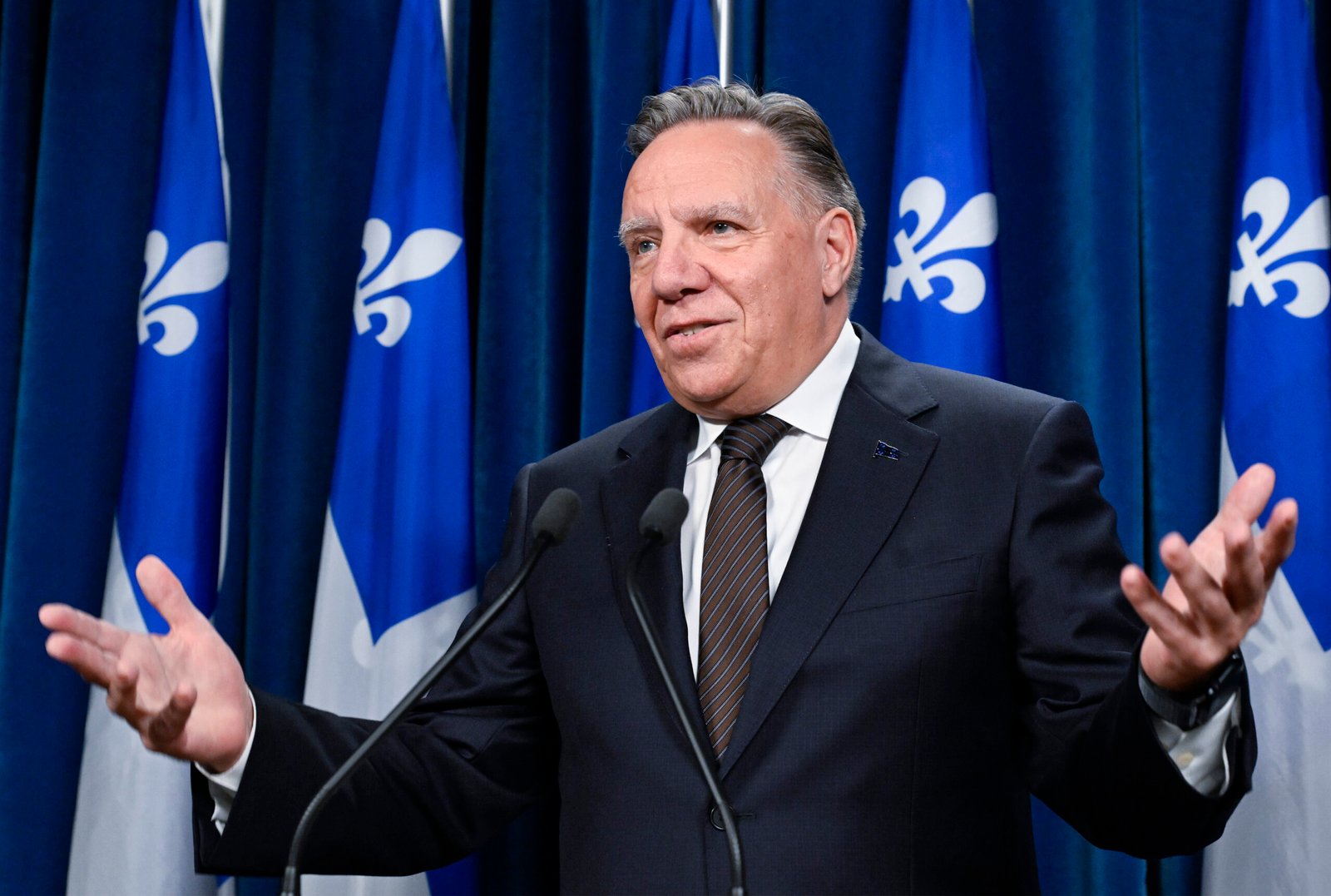
Quebec Premier François Legault has announced his decision to resign as premier and leader of the Coalition Avenir Québec (CAQ), setting off a leadership race months before the upcoming provincial election.
Legault will remain in office only until his party chooses a successor, a process expected to unfold in the coming weeks.
His announcement reshapes Quebec’s political landscape as parties prepare for a pivotal election later this year.
Legault Cites Desire for Change as Key Reason
Premier Legault told reporters in Quebec City that many residents are seeking a shift in leadership, and he believes stepping aside is in the best interest of both his party and the province.
“I see well that right now Quebecers want change first, and among other things, a change of premier,” he said.
Despite winning decisive majorities in 2018 and 2022, Legault acknowledged that his government’s popularity has waned in recent years.
He also noted that granting the CAQ fresh leadership would help it prepare for an increasingly competitive election environment.
Political Context: Polls and Public Opinion
Recent opinion polls showed the CAQ trailing behind both the Parti Québécois and the Quebec Liberal Party, a striking shift from its dominant position earlier in the decade.
The PQ, in particular, leads with strong support in key regions and has promised a new referendum on Quebec sovereignty if elected — a controversial issue that has shaped provincial politics for decades.
Political analysts say prolonged internal disputes, declining approval ratings, and a series of high-profile resignations within the party contributed to the CAQ’s slide in public opinion.
Legacy of a Founding Premier
Legault, 68, co-founded the Coalition Avenir Québec in 2011 and transformed it from a new political movement into the province’s ruling party.
His leadership saw the CAQ break nearly 50 years of alternating Liberal and Parti Québécois rule, bringing stability after long periods of political competition.
Supporters credit him with navigating Quebec through the COVID-19 pandemic and championing provincial autonomy within the Canadian federation.
However, his later years in office were marked by persistent controversies — including disputes with medical professionals, public backlash over reforms, and criticism of language and secularism laws.
Leadership Race and Timeline
Legault’s resignation triggers a formal leadership contest within the CAQ, which will select a new leader ahead of the fall 2026 provincial election.
Candidates ranging from cabinet veterans to business leaders are expected to enter the race, with the winner likely to become Quebec’s next premier.
The outcome of this leadership race could determine how the CAQ positions itself against other major parties, including the PQ and Liberals.
Stakes for the Upcoming Election
With the provincial election approaching, Legault’s resignation adds uncertainty to Quebec’s political future.
The Parti Québécois, which advocates for greater autonomy and a potential future referendum on separation, remains strong in current polls.
Meanwhile, the Quebec Liberal Party is also navigating a leadership transition, further complicating the competitive landscape.
Observers say the election could shift Quebec’s political balance and influence the province’s relationship with the federal government in Ottawa.
Implications for Quebec and Canada
Legault’s departure underlines broader questions about voter priorities and governance in Quebec.
His resignation reflects public fatigue with longstanding government leadership and a desire for new direction on issues like healthcare, economic strategy, and cultural identity.
For Canada as a whole, changes in Quebec’s leadership resonate beyond provincial borders.
Quebec plays a central role in national politics due to its size, culture, and economic contributions, and its political shifts often send ripple effects through federal-provincial relationships.