


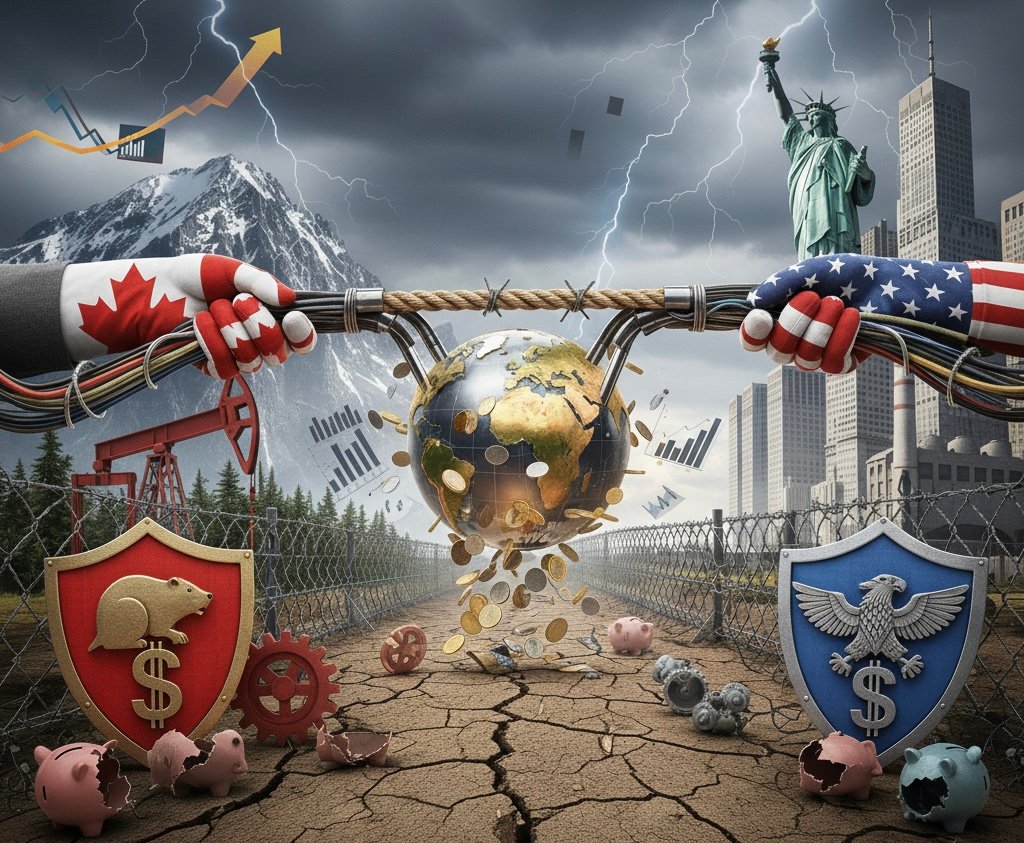
Ongoing trade tensions with the United States and other countries, caused by the tariffs, have reduced business confidence. Companies are delaying new projects, which slows long-term economic growth.
Population growth has also slowed due to lower immigration targets. This change affects labor markets, consumer demand, and overall provincial economies.
Provinces Leading Growth
- Newfoundland and Labrador is expected to lead growth in 2025, with GDP rising about 2.2%, thanks to a rebound in oil production.
- Saskatchewan shows strong prospects, growing around 2.0% in 2025, driven by mining investments in potash and uranium.
- Alberta will maintain moderate growth near 1.8% in 2025, even with a decline in large-scale projects; smaller initiatives will support 2026 growth.
Provinces Facing Challenges
- Quebec is projected to see modest growth: 0.5% in 2025 and 0.9% in 2026. Tariffs on aluminum, weak investments, and a slight population decline weigh on the economy.
- Ontario experiences similar pressures. Manufacturing and exports face obstacles, limiting growth to roughly 0.7% in 2025 and 0.9% in 2026.
- Manitoba and New Brunswick struggle as well. Manitoba’s exports have slowed, while New Brunswick faces population decline and weak business investment.
Strategies to Navigate Uncertainty
The federal government launched programs like the Regional Tariff Response Initiative (RTRI). These programs aim to support businesses in affected provinces, especially in the Prairies.
The focus is on diversifying markets, strengthening domestic supply chains, and reducing reliance on foreign trade.
Many Canadian companies are restructuring operations, seeking new markets, and expanding beyond the U.S. According to KPMG in Canada, 67% of business leaders believe they can survive a trade war lasting more than a year.
Why Provincial Resilience Varies
Each province responds differently due to factors like: dependence on U.S. exports, economic composition (industry, natural resources, services), demographics, and market diversification.
Regions with strong energy or resource sectors feel some relief, while manufacturing-heavy provinces face greater challenges.