


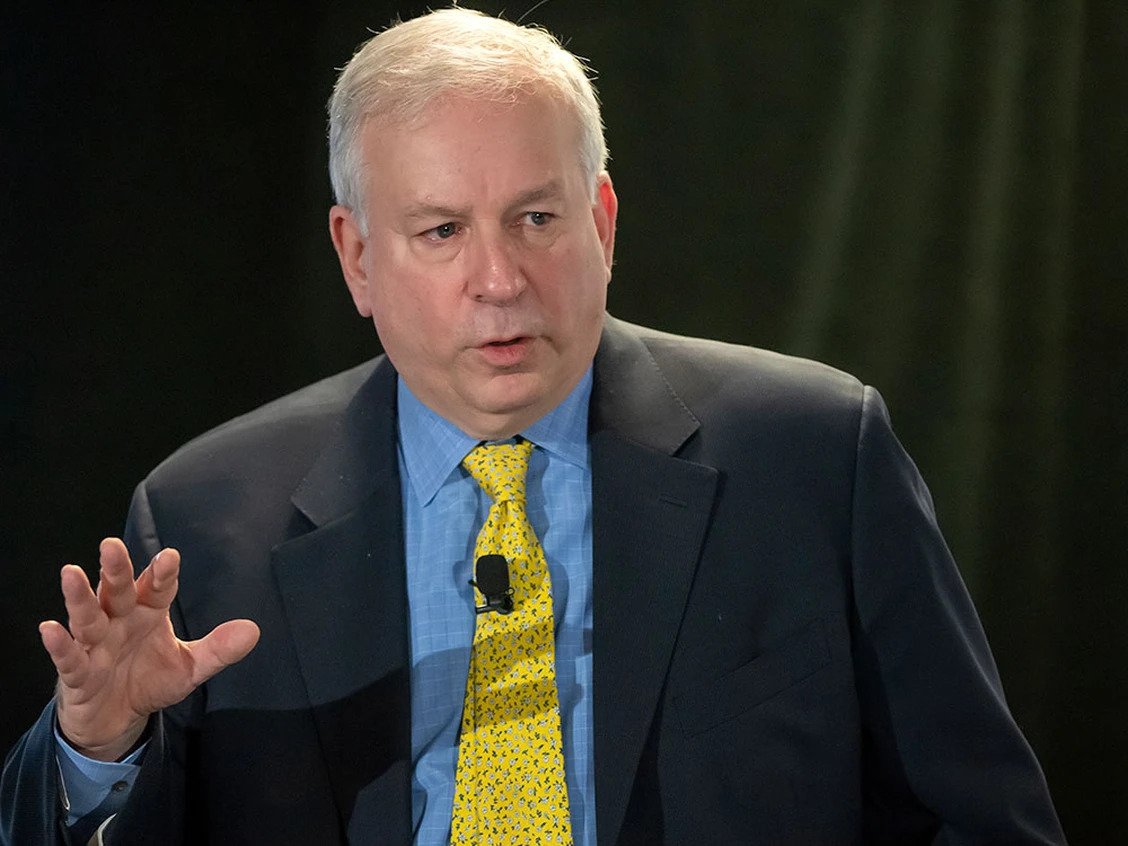
Recent interest rate cuts have failed to restore confidence or momentum across key sectors of Canada’s Economy.
Rosenberg Research founder and chief economist David Rosenberg says Canada’s economy remains “on life support.” In interviews with BNN Bloomberg, he argued that monetary easing has not solved deeper structural weaknesses.
Rosenberg’s Warning and Its Broader Meaning
David Rosenberg used unusually blunt language to describe current economic conditions. He said repeated rate cuts have not produced a meaningful rebound in growth.
According to Rosenberg, policy makers expected lower rates to boost borrowing and spending. Instead, households and businesses remain cautious and defensive.
He stressed that rate cuts alone cannot fix weak productivity and fragile demand. As a result, the economy continues to depend on policy support to avoid contraction.
This assessment contrasts with more optimistic official projections. However, it echoes concerns shared by other independent analysts.
Bank of Canada Rate Cuts and Limited Impact
The Bank of Canada began cutting interest rates after inflation cooled from earlier peaks. Officials aimed to support growth without reigniting price pressures.
Lower rates typically encourage consumer spending and business investment. However, Rosenberg argues that this transmission mechanism now works poorly.
High household debt limits borrowers’ willingness to take new loans. At the same time, elevated living costs continue to constrain disposable income. Businesses also remain hesitant amid uncertain global conditions. Consequently, investment growth has lagged historical recoveries.
Structural Weaknesses Behind the Slowdown
Rosenberg emphasized that Canada faces long-standing structural challenges. Productivity growth has remained weak for more than a decade.
Low productivity reduces wage growth and corporate profitability. Over time, this undermines competitiveness and living standards. He also pointed to heavy reliance on housing-related activity. That dependence leaves the economy vulnerable to interest rate cycles.
When housing slows, spillover effects hit construction, retail, and services. As a result, growth becomes uneven and fragile.
The Role of Household Debt and Consumer Behavior
Canadian households carry some of the highest debt levels among advanced economies. Mortgage obligations absorb a large share of monthly income.
Even with lower rates, many borrowers prioritize repayment over spending. This behavior dampens the stimulus effect of monetary policy.
Rosenberg noted that consumers feel less secure about future income. Job uncertainty encourages saving rather than discretionary purchases. Therefore, consumption growth remains subdued. This trend limits overall economic momentum.
Housing Market Signals and Economic Health
Housing often acts as a leading indicator for Canada’s economy. Recent data show stabilization rather than strong recovery. Lower borrowing costs have eased pressure on some buyers. However, affordability challenges persist in major urban markets.
Rosenberg argued that housing no longer delivers broad-based economic lift. Instead, activity concentrates in narrow segments and regions.
This pattern weakens spillover benefits across the economy. Consequently, growth remains patchy and vulnerable.
Labour Market Trends and Mixed Signals
Canada’s labour market still shows resilience compared with past downturns. Employment levels remain relatively high by historical standards. However, Rosenberg warned that job growth has slowed noticeably. Certain sectors already show signs of strain.
Wage growth has also moderated as inflation eases. This reduces purchasing power gains for many workers. As a result, labour strength may not offset broader economic weakness. Future job losses could amplify downside risks.
Global Pressures and External Risks
Rosenberg also highlighted risks coming from outside Canada. Global growth remains uneven and fragile. Trade disruptions and geopolitical tensions affect export demand. Canada’s open economy remains sensitive to these shocks.
Higher-for-longer rates in other countries add uncertainty. They influence capital flows and currency movements. Combined, these factors limit Canada’s ability to grow independently. Domestic policy must contend with external constraints.
Policy Limits and Fiscal Considerations
Monetary policy faces diminishing returns, according to Rosenberg. Each rate cut delivers less impact than before. This reality shifts attention toward fiscal policy choices. However, governments face rising deficits and debt concerns.
Expansive spending risks reigniting inflationary pressures. At the same time, austerity could deepen economic weakness. Rosenberg suggested that policy makers face narrow options. Balancing growth and stability has become increasingly complex.
Rosenberg’s Assessment and the Risks Facing Canadian Households
Rosenberg’s assessment matters because it challenges comforting narratives. Canadians often hear that rate cuts guarantee recovery. If the economy truly remains fragile, expectations must adjust. Households may need to plan more cautiously.
Businesses could delay expansion and hiring decisions. Investors might reassess risk exposure within Canada. Policy debates may also intensify before future elections. Economic credibility often shapes voter confidence and outcomes.
Implications for Future Economic Strategy
Rosenberg’s comments imply a need for deeper reforms. Productivity, innovation, and competitiveness require sustained attention. Education, infrastructure, and regulatory efficiency shape long-term growth. These factors extend beyond short-term monetary decisions.
Without progress, Canada may face prolonged stagnation risks. Rate cuts alone cannot deliver durable prosperity. Therefore, Rosenberg’s warning serves as a policy wake-up call. It underscores the urgency of addressing foundational economic issues.
A Cautious Outlook Moving Forward
Despite his pessimism, Rosenberg did not predict imminent collapse. Instead, he described a system dependent on continued support. That distinction matters for public understanding. Stability exists, but resilience remains weak.
Canada’s economy still avoids crisis conditions. However, recovery appears slow and uncertain. For now, Rosenberg urges realism over optimism. Acknowledging vulnerabilities may help guide better decisions.