



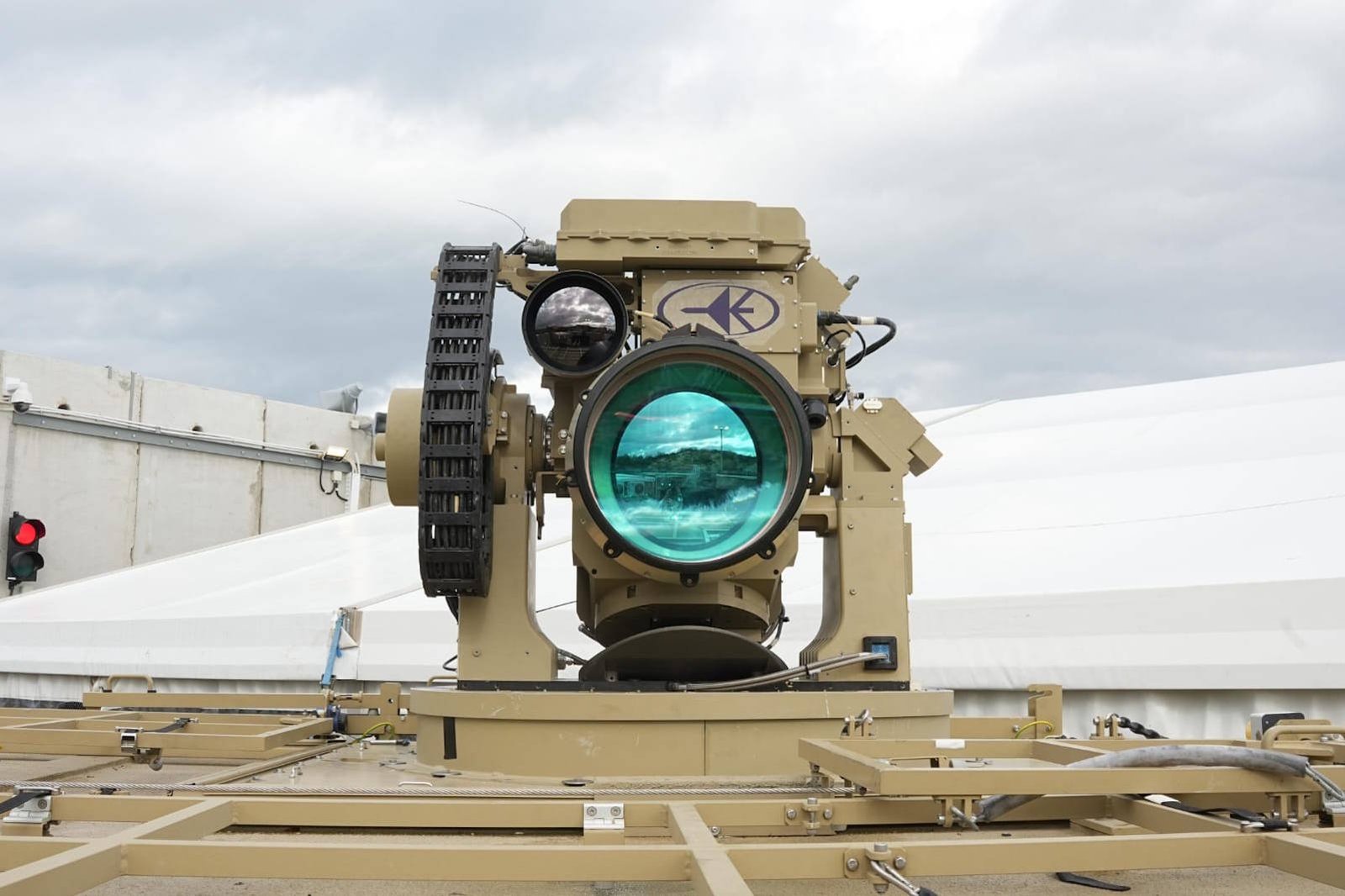
The system will soon become part of the Israel Defense Forces’ air and missile defense network.
The new weapon uses directed energy to intercept rockets, mortars, and drones more cheaply and quickly than traditional missile interceptors. Its deployment signals a shift toward advanced laser technology in national defense.
Iron Beam: A Laser-Powered Layer in Israel’s Defense Arsenal
The Iron Beam system represents a cutting-edge addition to Israel’s multi-tiered defense architecture. It was developed by the Israeli Ministry of Defense with Rafael Advanced Defense Systems, and integrated with Elbit Systems.
Unlike conventional missile interceptors, the system uses a high-energy laser to destroy aerial threats on contact. This allows for extremely rapid reaction times and a lower cost per engagement compared with traditional kinetic interceptors.
Iron Beam has an approximate effective range of up to 10 kilometres and can target short-range rockets, mortar shells, and unmanned aerial vehicles (UAVs).
Operational Milestone: Deployment and Integration
On Dec. 28, 2025, Israel received its first operational Iron Beam system, moving the technology from development to active service. The transfer was confirmed by the Ministry of Defense of Israel.
Defense officials described the milestone as a turning point for national defense. The laser system will be integrated into existing frameworks, including Iron Dome, David’s Sling, and Arrow defensive layers.
This layered approach helps Israel defend against a wide range of threats—from short-range projectiles to long-range ballistic missiles.
Technology and Strategic Advantages
Iron Beam’s laser uses concentrated energy to neutralize threats in one of two ways: by detonating the target’s fuse or by damaging critical components to disable it.
Because the system does not rely on physical interceptors, its operating costs per engagement are much lower than traditional air defense missiles.
Rapid engagement speed also improves defense against swarming drone attacks, a growing threat in modern conflicts. The system’s precision reduces collateral risk in densely populated areas.
Research, Testing and Battlefield Evolution
Iron Beam has a long developmental history, with initial unveilings and demonstrations dating back years. Earlier tests during the Iron Swords war saw laser technologies used to intercept incoming drones and other threats.
Recent ground tests proved the system’s capability against rockets, mortars, UAVs, and even low-flying aircraft under operational conditions. That performance cleared the way for its deployment by late 2025.
How Iron Beam Complements Existing Systems
Israel’s multi-layered air defense includes several established systems, each covering different threat profiles:
- Iron Dome intercepts short-range rockets.
- David’s Sling targets medium- and long-range threats.
- Arrow systems counter ballistic missiles at high altitudes.
- Iron Beam adds a high-speed, low-cost laser layer for immediate, short-range threats.
Iron Beam’s integration helps preserve expensive interceptor missiles for high-value threats by using lasers for lower-cost engagements. This improves overall sustainability and readiness.
Broader Implications for Military Defense
Israel’s deployment of a laser-based air defense weapon reflects a broader shift in military technology worldwide toward directed energy systems. Such capabilities could reshape how nations address drone swarms, rocket barrages, and other asymmetric threats.
High-power laser weapons like Iron Beam reduce reliance on expensive interceptor missiles and can operate with rapid precision over sustained periods. This makes them attractive for both defensive and deterrence roles.
Other countries are also exploring similar technologies, but few have achieved operational deployment at this scale. Israel’s progress places it at the front of this emerging field.
Why This Matters to Canadians and Global Security
Canada has strategic partnerships with NATO allies and often participates in joint defense research and procurement. Advances in air defense technology, such as laser systems, could influence future collaboration strategies.
Globally, the proliferation of low-cost aerial threats has altered defense priorities. Swarming drones, rockets, and mortars challenge traditional interceptor-based systems, making cost-effective alternatives crucial.
For Canadian defense planners, observing Israel’s Iron Beam deployment offers lessons in integrating new technologies into established defense networks. It highlights potential pathways for Canada’s own modernization efforts.
Moreover, as conflicts continue to evolve, developments in laser weapons may affect how national security is conceptualized across allied nations, including Canada.