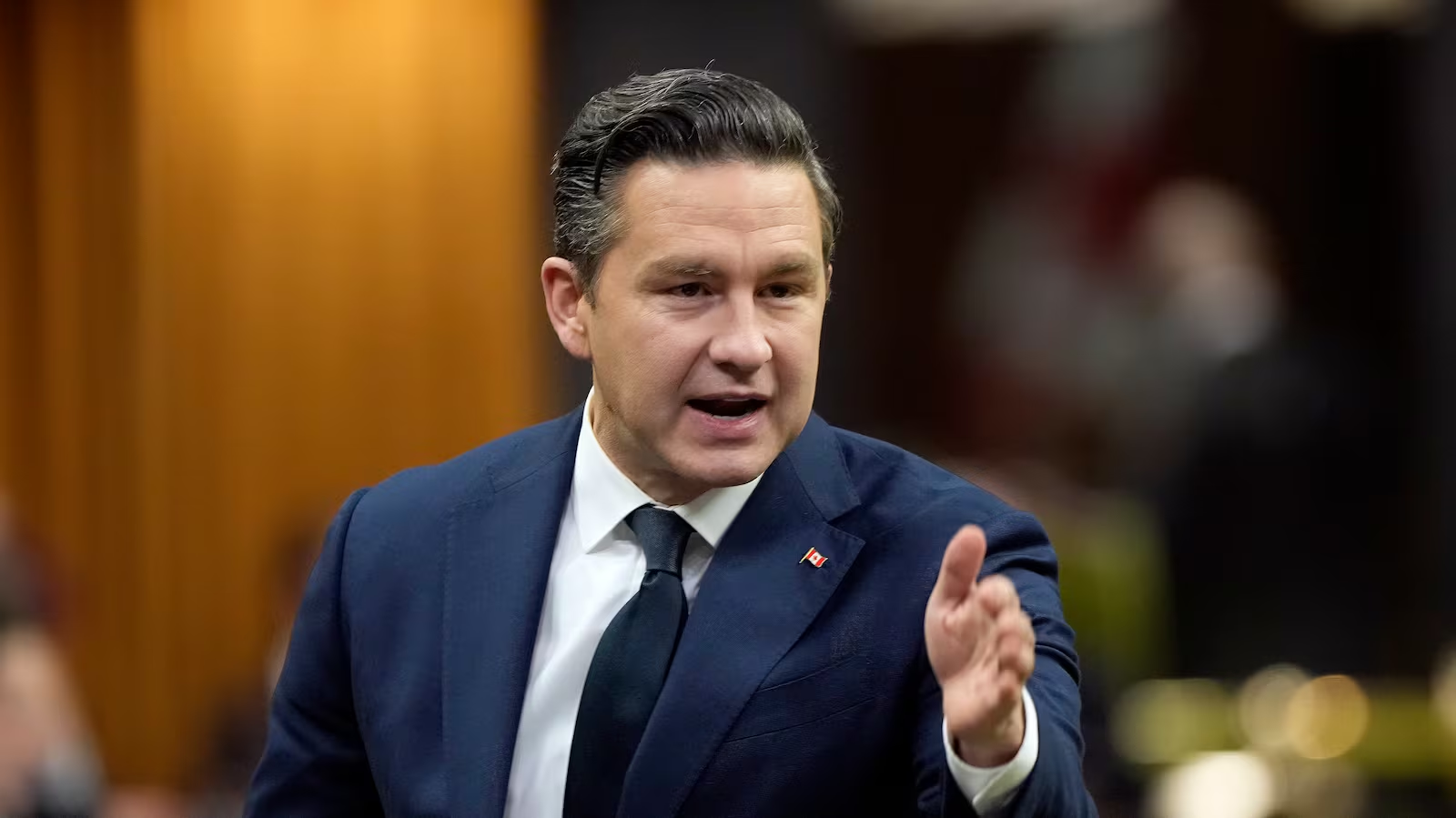



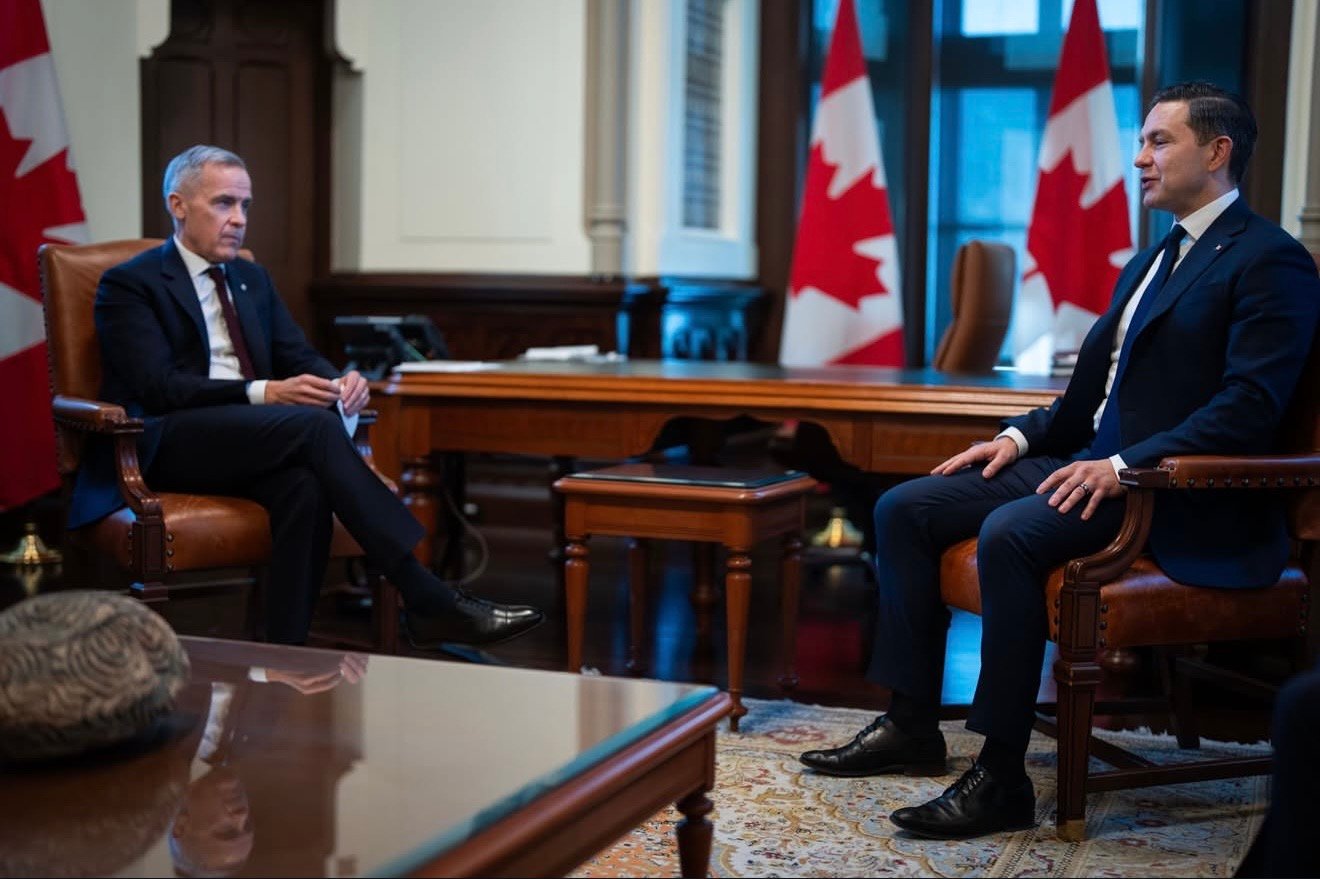
Conservative Leader Pierre Poilievre and Prime Minister Mark Carney met on Wednesday in Ottawa for a focused discussion on the economy, Parliament cooperation, and national priorities.
The meeting took place at West Block on Parliament Hill, marking a rare instance of cross-party engagement amid ongoing legislative challenges.
Poilievre used the meeting to urge Carney to pursue policies that address affordability, safety, and economic self-reliance. He also raised concerns about taxation, investment, and international negotiations.
Poilievre’s Priorities: Affordability, Safety, and Self-Reliance
Pierre Poilievre said his message to Mark Carney was clear: “Work with us.” He framed his comments around fast-tracking policies for a more affordable, safe, and self-reliant Canada.
Poilievre told reporters that lowering taxes for Canadians was central to his pitch. He expressed disappointment in the size of the federal deficit and urged fiscal restraint.
He also offered specific suggestions on how to bring investment back into the economy. That included restating Conservative offers to help Ottawa in Canada–U.S. trade negotiations.
To Poilievre, affordability also ties directly to tackling high costs for everyday Canadians. He highlighted food prices, housing affordability, and economic insecurity in his remarks to the media before and after the meeting.
Carney’s Focus: Cooperation and Legislative Progress
Prime Minister Mark Carney characterized the meeting as a chance to strengthen cooperation across party lines. He publicly said it was an important time to work together and pass legislation Canadians are counting on.
However, officials in Carney’s office noted that key differences remain on specific policies.
Carney’s team said he used the meeting to push Poilievre to support the government’s budget implementation bill.
That bill includes funding for priorities such as housing, child care, dental care, and disability support.
Carney’s office also highlighted the need for Conservative backing on criminal justice reforms.
Notably, Carney has faced resistance from Conservatives on several fronts, including changes to bail and sentencing laws and an anti-hate bill that Conservative MPs have filibustered.
Trade and Economic Cooperation: Shared Goals, Different Approaches
The meeting underscored both leaders’ interest in addressing Canada’s economic challenges, including global trade tensions and market access. Poilievre’s contact with Carney echoes a broader Conservative push to influence trade priorities, particularly with the United States.
In his meeting remarks, Poilievre stressed the importance of negotiating from a position of strength.
He advocated for policies that enhance Canada’s self-reliance and competitiveness in global markets.
Carney has been active internationally and domestically in trade and economic planning.
In recent foreign policy remarks, he emphasized diversification and strengthening ties with partners beyond the U.S. to protect Canadian sovereignty and resilience.
Deficit, Taxes, and Investment: Points of Contention
A major theme in Poilievre’s agenda is reducing taxes and shrinking the deficit. He framed these priorities as essential to improving affordability for Canadians.
Conservative proposals have included lower taxes and incentives designed to spur domestic investment. Such proposals reflect a long-standing party position linking tax policy with economic growth and competitiveness.
By contrast, the government’s budget priorities feature targeted spending programs and incentives in key sectors such as housing and infrastructure. While Carney’s team defended these measures, it also noted that fiscal responsibility remains part of long-term planning.
Political Context: Minority Parliament and Cooperation
The meeting comes at a time when Canada’s Parliament remains closely divided and often gridlocked. Conservative MPs have at times used procedural tools to delay or block government legislation.
Carney appears keen to secure support from opposition parties to pass critical bills on affordability and security. Inviting Poilievre for the discussion signals a willingness to engage even amid political rivalry.
Maintaining such cooperation could prove pivotal as Canada navigates economic pressures at home and abroad.
Economic Stakes Behind the Poilievre–Carney Meeting
This encounter matters because it illustrates how political leaders are responding to urgent economic concerns. Canadians continue to face challenges with inflation, housing costs, and employment growth.
Engagement between government and opposition on these issues signals an attempt to move beyond partisan conflict. For many citizens, progress on affordability and economic policy directly affects household budgets.
Trade and investment policies also influence jobs, exports, and Canada’s position in global markets. Poilievre’s push on trade negotiations reflects broader worries about Canadian competitiveness.
Finally, cooperation in Parliament could determine whether key bills become law or stall. This dynamic affects everything from taxes to criminal justice to social supports.