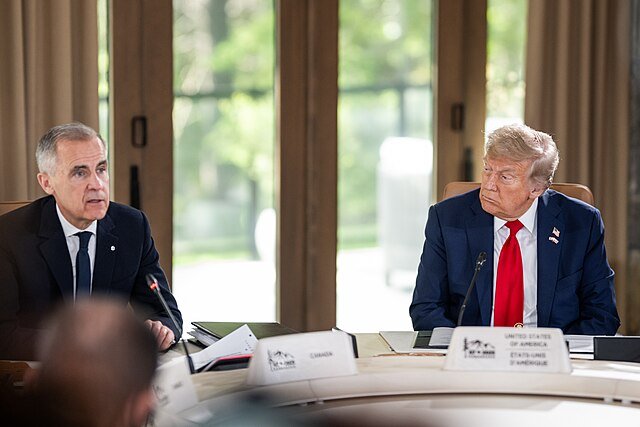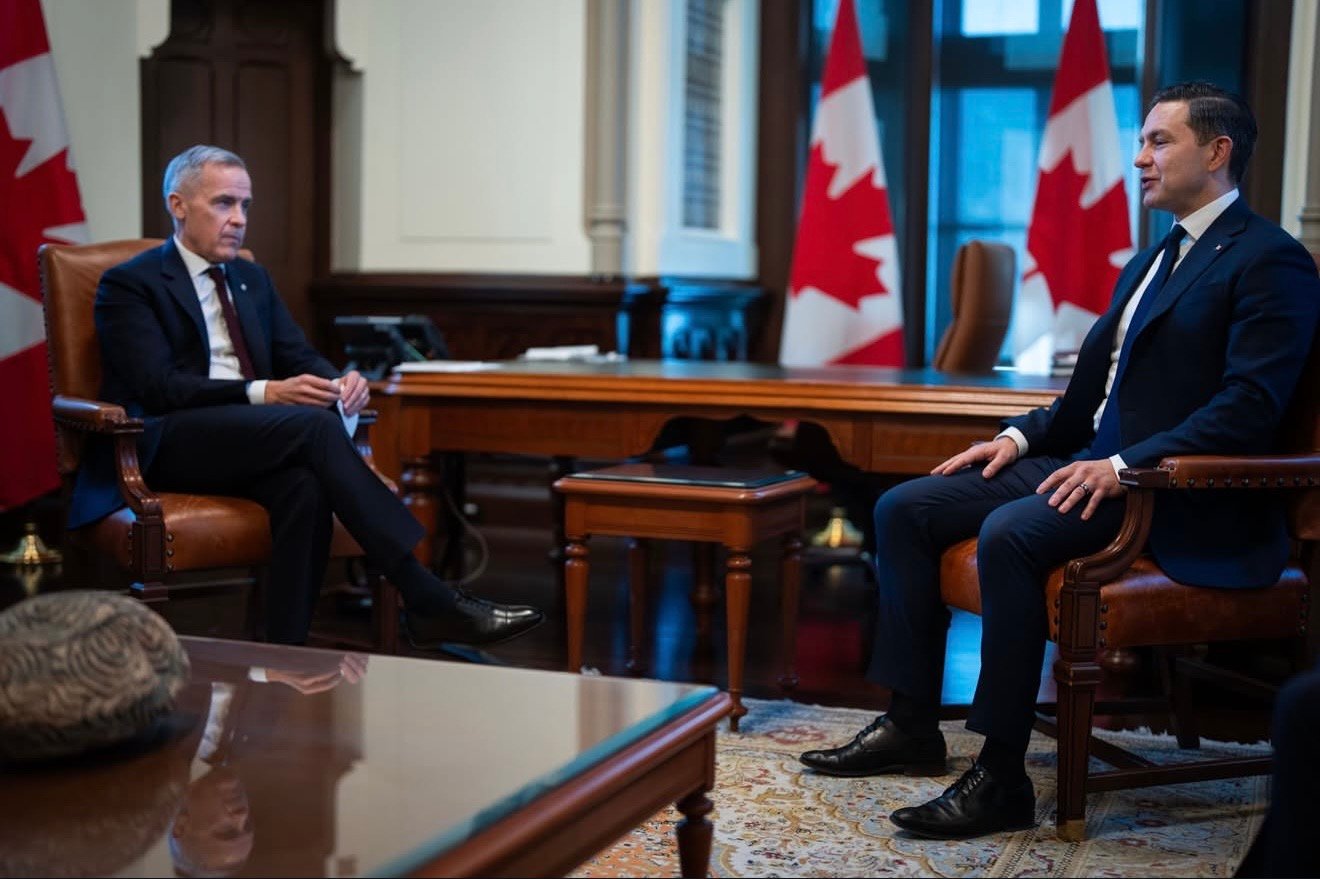




Canada’s trade relationship with the United States remains under intense political and economic scrutiny.
Pierre Poilievre renewed his criticism of the Liberal government during a news conference in St. John’s, Newfoundland and Labrador, arguing that Canadians deserve greater clarity on the direction of ongoing trade negotiations with Washington. His remarks came as Canadian and U.S. officials continued discussions aimed at reducing trade tensions and strengthening economic cooperation.
Poilievre Calls for Greater Transparency in Trade Negotiations
Speaking to reporters, Poilievre said businesses, workers, and provincial governments should receive more information about Canada’s negotiating objectives.
According to the Conservative leader, prolonged uncertainty discourages investment and makes it harder for Canadian companies to make long-term decisions. He argued that Ottawa should regularly brief Parliament and the public as negotiations progress instead of limiting updates to broad public statements.
Poilievre also maintained that Canada should negotiate from a position of economic strength. In his view, a stronger domestic economy would provide greater leverage during discussions with the United States.
Canada and the United States Continue High-Level Trade Discussions
Poilievre’s comments coincided with meetings between Canadian officials and U.S. Trade Representative Jamieson Greer in Washington.
International Trade Minister Dominic LeBlanc described the discussions as constructive and said both sides continue working toward a broader agreement that would improve market certainty while addressing sector-specific trade barriers.
Although neither government has announced a final timeline, officials have indicated that negotiations cover several issues beyond tariffs, including long-term economic cooperation, investment, and the future implementation of the Canada–United States–Mexico Agreement (CUSMA).
The discussions come at a critical time for North American trade as businesses seek greater predictability following months of tariff disputes and policy uncertainty.
Tariffs Continue to Affect Key Canadian Industries
Despite CUSMA allowing most goods to move across borders without tariffs, several strategic industries continue facing trade restrictions.
Steel and aluminum producers remain vulnerable to U.S. trade measures, while the softwood lumber dispute continues to affect Canada’s forestry sector. Manufacturers also continue monitoring developments involving automotive supply chains, where even small policy changes can have significant financial consequences.
Poilievre argued that eliminating unnecessary trade barriers should remain one of Canada’s highest priorities. He said every additional tariff increases costs for businesses and ultimately affects consumers on both sides of the border.
Economists generally agree that prolonged tariff disputes reduce business confidence, delay investment decisions, and weaken supply chains that have become deeply integrated over decades.
Conservatives Link Trade Policy to Canada’s Economic Competitiveness
During his remarks, Poilievre connected international trade with Canada’s broader economic performance.
He argued that trade negotiations cannot be separated from domestic economic policy. According to the Conservative leader, Canada should accelerate approvals for major infrastructure and natural resource projects while reducing regulatory delays that discourage private investment.
Poilievre also reiterated his support for expanding Canadian energy exports, arguing that stronger export capacity would improve Canada’s bargaining position during international negotiations.
His broader message focused on increasing Canada’s productivity and strengthening the country’s ability to compete globally.
The Carney Government Emphasizes Cooperation Over Confrontation
Prime Minister Mark Carney has taken a different approach since assuming office.
Rather than escalating public rhetoric, the Liberal government has emphasized continued dialogue with Washington and the importance of preserving one of the world’s largest bilateral trading relationships.
Carney has repeatedly argued that Canada and the United States share deeply integrated supply chains that benefit workers and businesses in both countries. He has also advocated reducing unnecessary tariff barriers while protecting Canada’s strategic economic interests.
Government officials have stressed that successful negotiations require patience and consistent engagement rather than public confrontation.
Why Canada–U.S. Trade Matters So Much
The United States remains Canada’s largest trading partner by a wide margin.
Every day, billions of dollars in goods and services cross the Canada–U.S. border. Canadian exports support hundreds of thousands of jobs across manufacturing, agriculture, mining, forestry, aerospace, technology, and energy.
Because many products cross the border several times before reaching consumers, even modest tariff increases can raise production costs throughout North America.
This economic integration means that political disagreements often have immediate consequences for businesses, workers, and consumers in both countries.
For that reason, trade negotiations frequently become one of the most closely watched issues in Canadian economic policy.
Businesses Continue Seeking Greater Certainty
Business organizations have consistently emphasized the importance of stable trade rules.
Companies making long-term investments often require predictable regulatory and tariff environments before expanding operations or hiring additional workers.
Trade uncertainty can delay factory expansions, discourage foreign investment, and increase operating costs throughout supply chains.
Many economists note that predictable trade policy contributes not only to economic growth but also to greater investor confidence.
As negotiations continue, many Canadian businesses are hoping for an agreement that reduces uncertainty and reinforces North America’s competitive position in global markets.
Political Differences Could Shape Future Trade Policy
The debate between the Liberal government and the Conservative opposition reflects two different political approaches.
Poilievre believes Canada should negotiate more aggressively while simultaneously strengthening domestic competitiveness through lower taxes, regulatory reform, and increased resource development.
Meanwhile, Carney’s government argues that sustained diplomacy and institutional cooperation provide the strongest foundation for achieving lasting trade stability.
These contrasting strategies are likely to remain central topics in Parliament as negotiations evolve over the coming months.
What Comes Next for Canada–U.S. Trade Relations
No final agreement has yet been announced, and negotiations remain ongoing.
Officials from both countries continue working through complex issues involving tariffs, market access, investment, and long-term economic cooperation.
Observers expect discussions to continue alongside preparations for future reviews of CUSMA, making the coming months particularly important for North American trade policy.
Whether Canada ultimately secures additional tariff relief or broader economic commitments, the outcome will influence investment decisions, business confidence, and economic growth for years to come.
For Canadians, the negotiations extend far beyond politics. They will shape the prices consumers pay, the competitiveness of Canadian industries, and the future of one of the world’s most important trading partnerships.