


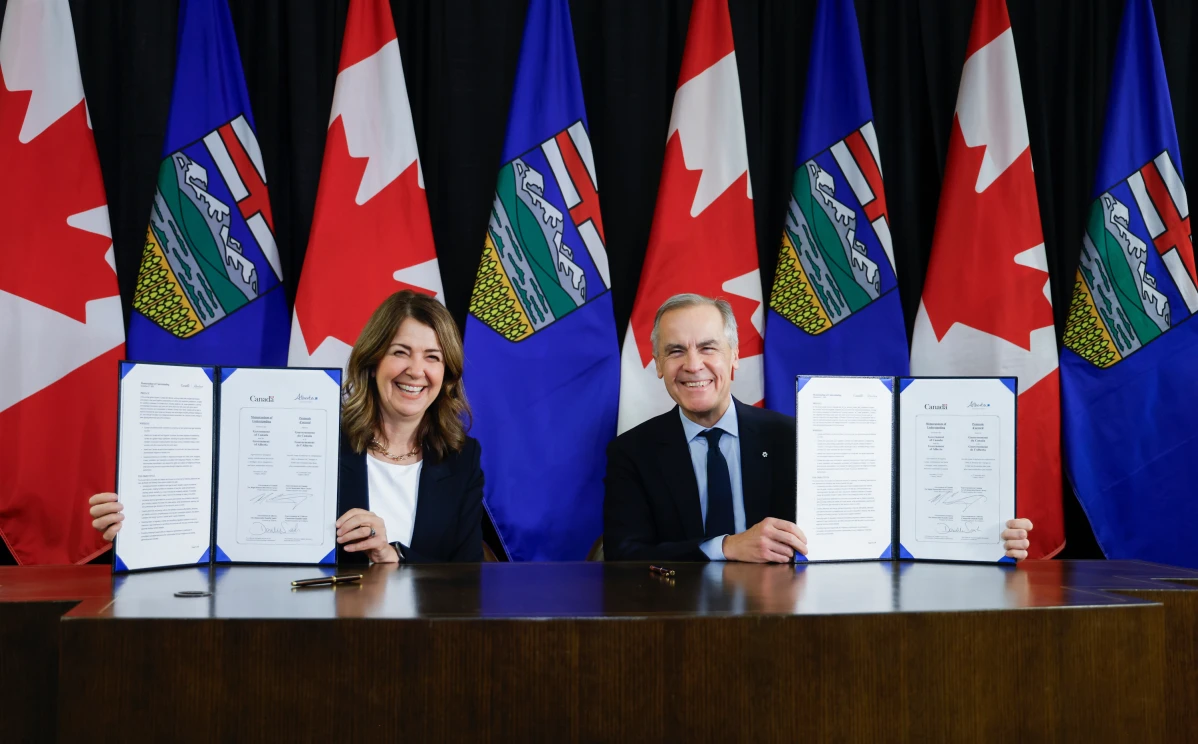
The federal government and Alberta signed a comprehensive energy agreement establishing new rules for the carbon tax on November 27, 2025.
What the Agreement Changes
Under the memorandum of understanding, Canada will drop the proposed oil and gas emissions cap and suspend clean electricity rules in Alberta.
In exchange, the province will tighten its industrial carbon pricing and support the massive Pathways Plus carbon-capture project.
Meanwhile, the deal sets the stage for a new oil pipeline from Alberta to British Columbia’s coast. The pipeline would aim to export low-emission Alberta bitumen to overseas markets.
The Pipeline Plan and Its Conditions
The new pipeline would carry roughly one million barrels per day of bitumen to a Pacific port. Private companies must finance the project, and Indigenous groups may co-own and profit from ownership stakes.
To proceed, the pipeline project must meet strict emission-reduction conditions — including approval of the Pathways carbon-capture plan and a 75% methane-cut target over the coming decade.
Reactions from Parties and Industry
Many in industry and the energy sector welcomed the deal. They argue it protects jobs, secures investments and helps Canada diversify energy exports beyond the U.S.
However, environmentalists and some cabinet members strongly oppose it. Former environment minister Steven Guilbeault resigned in protest. He said the deal undermines Canada’s climate agenda.
Critics also warn that the pipeline threatens coastal ecosystems, especially along British Columbia’s northern coast.
Indigenous leaders and B.C. officials voiced concern over potential tanker traffic and ecological harm.
Economic and Environmental Stakes
Proponents claim the Pathways carbon-capture scheme will make Alberta’s oil among the lowest-carbon heavy crude worldwide. They also promise hundreds of thousands of jobs and major export growth.
On the other hand, opponents argue this deal locks Canada into decades of fossil-fuel dependency and compromises long-term climate commitments.
They fear the pipeline and regulatory rollbacks will undo progress toward net-zero emissions.
What Happens Next
Alberta must finalize its carbon-pricing framework by April 1, 2026. The province and private sector must submit a pipeline proposal by July 1, 2026. If all conditions meet, construction could start soon after approval.
Yet much remains uncertain. British Columbia and many Indigenous groups oppose tanker traffic and a pipeline route.
Federal regulatory, environmental, and political hurdles could still derail the project — leaving its fate unclear.